Brokerage Operations - 2026
The Ultimate Guide to Kentucky MLS Listing Compliance (And How to Automate It)


In Kentucky, there are rules that all Multiple Listing Services have to follow. This includes groups like the Greater Louisville Association of Realtors and the Lexington-Bluegrass Association of Realtors. These rules are really important because they help make sure everything is correct and fair for everyone involved - buyers, sellers, and agents. The rules are in place to keep things accurate and honest, which is good for everyone. These rules are in place to make sure everything is accurate and fair for buyers, sellers, and agents. They help keep the market honest. But for the people running the brokerage, these rules can be a real headache. They create a lot of extra work and complexity. The rules are meant to protect everyone involved, but they can also make things harder for the brokerage to operate smoothly.
A lot of teams still use outdated methods for handling complex data entry, like separate email threads and static spreadsheets. This fragmented approach inherently scales risk alongside revenue. Top-performing brokerages approach this differently. They view compliance not as a reactive administrative task, but as a proactive infrastructure layer.
In this guide, we dissect the framework of strict local compliance and outline exactly how to deploy automated listing infrastructure to ensure speed, accuracy, and scalable operations.
The Core Pillars of MLS Oversight
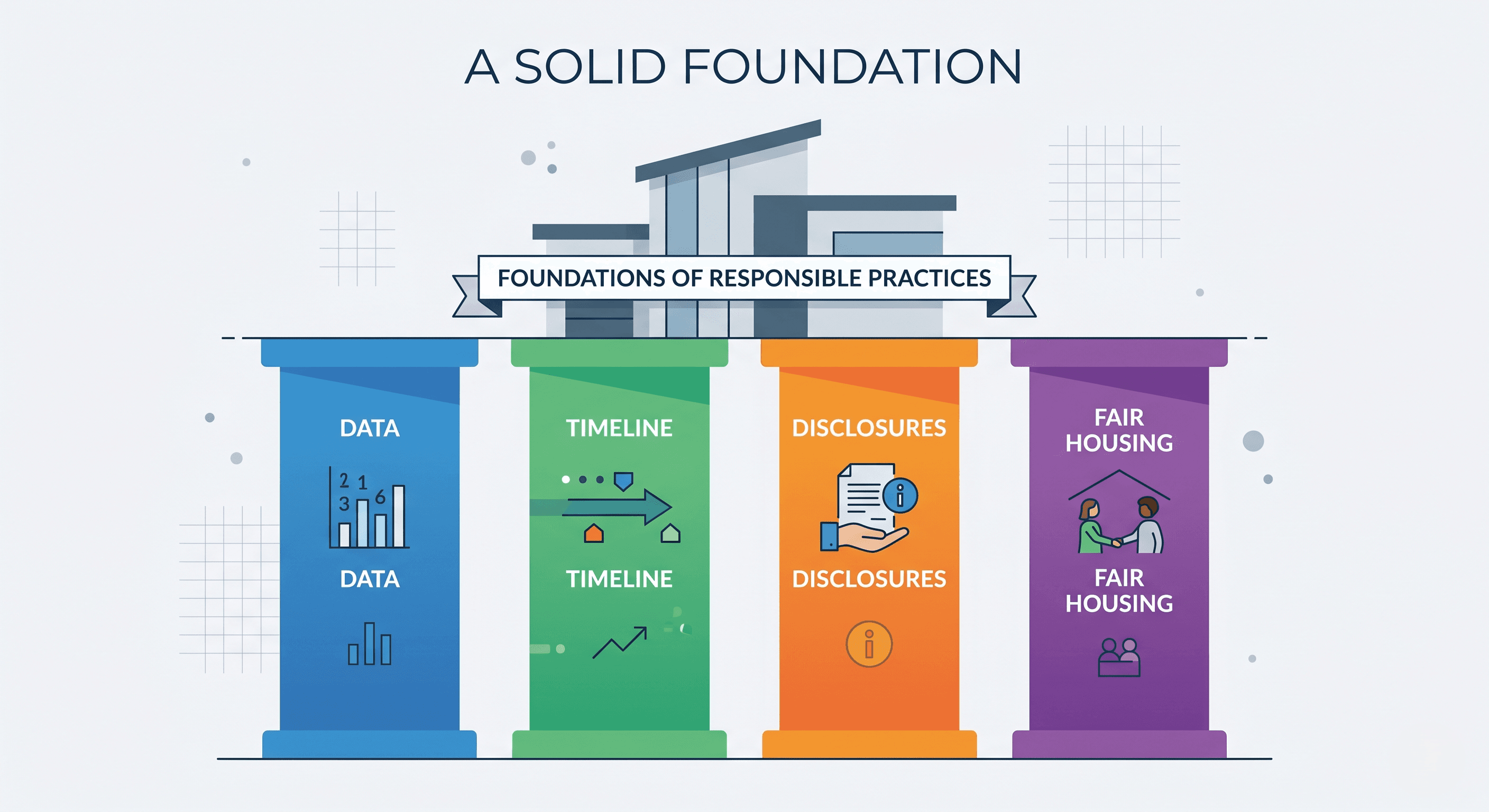
To operate without friction, your back-office systems must account for four primary vectors of compliance enforcement:
- Mandatory Disclosures: In Kentucky, there are certain things that sellers have to tell buyers about a property. This is because of state laws that require it. For example, sellers need to fill out a form called the Seller's Disclosure of Property Conditions, which is also known as KREC Form 400. They also need to give buyers a federal disclosure about lead-based paint if the property was built before 1978. Both of these documents have to be signed and attached to the property listing before it can be made active. This way, buyers have all the information they need to make a decision about whether or not to buy the property.
- Data Integrity and Standardization: Every field entered into the MLS must align with Real Estate Standards Organization (RESO) guidelines. Incorrect square footage sourcing, inaccurate school districts, or misclassified architectural styles degrade data quality and frequently result in immediate flags.
- Strict Status Timelines: Activating a listing, updating a price, or moving a property from "Active" to "Pending" operates on a ticking clock. Most Kentucky MLS boards require status changes to be executed within 24 to 48 hours of the triggering event.
- Fair Housing Adherence: Listing remarks are systematically scrubbed for Fair Housing violations. Language that inadvertently discriminates or references protected classes will result in severe penalties and potential legal exposure.
Operational Insight:
MLS compliance engines are increasingly utilizing AI-driven text analysis to scan agent remarks for Fair Housing violations prior to syndication. Relying on an agent's memory to avoid problematic phrasing is an outdated strategy; your listing workflow must include a deterministic validation layer.
Even minor errors, such as missing tax IDs, inverted numbers in a zip code, or an incorrect property sub-type, can cause listings to be rejected by the MLS data compliance checkers. When your administrative team operates reactively, correcting these errors consumes bandwidth that should be directed toward revenue-generating activities.
The financial impact of manual entry is highly quantifiable. According to recent real estate technology impact studies, brokerages relying on manual data entry face an average initial MLS submission error rate of 12% to 15%. Correcting a single compliance flag, whether a missing lead-based paint addendum or an invalid tax ID, consumes an average of 45 to 90 minutes of administrative bandwidth. Furthermore, the National Association of REALTORS® (NAR) reports that real estate professionals without automated back-office support lose up to 40% of their operational bandwidth to administrative and compliance-related tasks. For a high-volume brokerage processing 100+ listings a month, that error rate translates directly into hundreds of lost hours and delayed syndications.
Where Traditional Workflows Break Down
Most brokerages attempt to solve compliance by throwing more human capital at the problem. Administrators rely on fragmented, highly vulnerable processes:
- Spreadsheet Tracking: Using Excel or Google Sheets to track which documents have been signed and uploaded creates version control nightmares.
- Email Thread Approvals: Chasing agents for the final page of a Seller's Disclosure via email guarantees bottlenecks and lost files.
- Manual Data Entry: Copying and pasting property data from public tax records into the MLS without a secondary validation layer statistically guarantees a 3-5% error rate per listing.
- Siloed Communication: When status changes occur in the field, the delay in communicating that change to the back office directly violates MLS timeline rules.
These operational gaps create compounded risk. Every time a listing is delayed by a compliance rejection, your brokerage loses credibility with the seller. Furthermore, compounding MLS fines directly impacts net margins. In elite real estate operations, manual entry is recognized for what it is: a structural vulnerability.
To achieve consistent Kentucky MLS listing compliance, you must engineer a system that validates every data point before the payload is delivered to the MLS. Think of an MLS Pre-Flight Checklist as your brokerage's compliance firewall, a standardized protocol that ensures zero defects.
Critical Verification Stages
A high-performance Pre-Flight Checklist must standardize the following verification points:
- Document Verification Layer:
- Confirm complete execution of the Kentucky Seller's Disclosure.
- Verify federal Lead-Based Paint forms (if applicable based on year built).
- Ensure the Exclusive Right to Sell agreement is fully executed and matches the listing date.
- Data Field Validation Layer:
- Cross-reference tax ID, lot dimensions, and legal description against county property valuation administration (PVA) databases.
- Verify room dimensions, bedroom/bathroom counts, and HOA fee structures.
- Media and Asset Compliance:
- When taking the main photos, make sure they don't show any signs or logos from real estate companies or agents. This is important because it's against the rules of the Multiple Listing Service. We need to follow these rules, so please check the photos carefully before using them.
- Verify virtual staging compliance, ensuring appropriate watermarks or disclosures are present if the MLS requires them.
- Status and Financial Validation:
- Confirm the listing price matches the executed listing agreement exactly.
- Ensure the listing date aligns with MLS submission rules to avoid "coming soon" timeline violations.
- Language and Syndication Checks:
- Audit public remarks for Fair Housing compliance.
- Ensure private agent remarks contain appropriate showing instructions and lockbox details without violating security protocols.

Operational Insight:
Implementing a "Hard Stop" workflow is highly recommended. Do not allow a transaction coordinator or listing manager to proceed with MLS data entry until the Document Verification Layer is 100% complete. Partial entries lead to forgotten attachments.
Automation replaces human guesswork with engineered precision. When you transition from a manual checklist on a clipboard to an automated, trigger-based workflow, Kentucky MLS listing compliance ceases to be a liability and becomes a background process.
The Mechanics of Automated Compliance:
High-growth real estate teams treat compliance as operational infrastructure. They deploy listing management software and systematic workflows that enforce standardization at every stage of the lifecycle.
- Zero Missed Requirements: Automated systems utilize conditional logic. If a was built in 1974, the system will stop the MLS submission until the Lead-Based Paint disclosure form has been uploaded and checked.
- Faster Listing Activation: When agents use special connections and standardized forms to collect information, data goes straight from the agent's first meeting to the office dashboard. This means listings can be activated on the same day, without the hassle of manual checks.
- Consistent Brokerage Quality: Having a consistent quality in brokerage is really important. Thanks to automation, even the newest team member can ensure that listings are flawless and accurate, just like those of experienced agents. The system checks everything to make sure it meets the standard, which means everyone's work is of high quality. This way, all listings are perfect and error-free, giving everyone confidence in the work they do.
- Seamless Revisions: Making changes to things like prices, status, and open houses is straightforward. We use automated systems that can update the MLS right away, so you don't have to stress about missing a deadline to make changes within a day. This way, everything can run smoothly and we can avoid mistakes. It's all about keeping things simple and efficient, and our systems help us do just that. With instant updates, we can make sure that all the information is accurate and up-to-date, which is really important for keeping everything on track.
Instead of reacting to warnings from the MLS board, your team operates from a posture of confidence. Listings go live faster, errors approach absolute zero, and agents are freed from administrative friction to focus entirely on client acquisition.
If you want to eliminate compliance risk and deploy true listing infrastructure without building the software stack yourself, PrimeRealOps delivers precision-engineered Listing Management explicitly designed for high-volume brokerages.
We do not just provide labor; we deploy a fully mapped operational system that integrates directly into your existing environment.
The PrimeRealOps Listing Management System
Our infrastructure ensures absolute compliance across every Kentucky MLS board. The system includes:
- Built-in Fair Housing Audits: Algorithmic and human-verified scrubbing of all listing remarks.
- Automated Pre-Flight Checklists: Standardized workflows custom-mapped to local KREC and MLS requirements.
- Flawless Data Entry: Precision MLS input, optimized photo uploads, and rigorous validation workflows.
- Real-Time Lifecycle Management: Error-free revisions, status updates, and continuous compliance monitoring until the property closes.

Simple, Scalable Pricing:
Scaling your operations shouldn't require complex headcount mathematics. Our pricing is designed for linear, predictable growth:
- Pro Tier: $15 / listing: Fast, accurate, compliance-driven MLS input perfect for teams needing rapid deployment.
- Prime Tier: $39 / listing: Unlimited changes, status updates, and full-service listing management from pre-market to pending.
We integrate directly into your current CRM and compliance systems. No data migration is required. You maintain control; we provide the operational engine.
Conclusion:
Strict MLS enforcement makes Kentucky listing compliance a structural pillar of your brokerage, not just an administrative task. Using manual data entry can lead to expensive mistakes, put your profits at risk of increasing fines, and hurt the trust of sellers for good. But the best real estate teams have found a way to make compliance work for them, not against them. They do this by creating automated checklists to review things before they happen and using the same workflows every time. This helps them stay on top of things and turn compliance into a strength that helps them grow.
Optimize your back office with our Listing Management services today.

Market Intelligence to Your Inbox
Receive curated analysis of the global HNW real estate market, delivered every Tuesday.