
Ultra-modern luxury penthouse interior
OPERATIONAL EXCELLENCE

Elite Real Estate OperationsReplacing Chaos With Precision

We provide elite Inside Sales, Transaction Coordination, Listing Coordination and Backend Management for top-tier US Brokers. Stop being an administrator. Start being a closer.

A
B
C
D
Trusted by 200+ real estate operators
Scroll

0+

Listings Processed

0%

Client Retention

0%

Data Accuracy

0+

Transactions Handled

PropTech & Platforms We Master

EK MLS
PARAGON MLS
PROP2U
GEN-AI TOOLS
MAILCHIMP
MLS INTERFACES
EK MLS
PARAGON MLS
PROP2U
GEN-AI TOOLS
MAILCHIMP
MLS INTERFACES
EK MLS
PARAGON MLS
PROP2U
GEN-AI TOOLS
MAILCHIMP
MLS INTERFACES
EK MLS
PARAGON MLS
PROP2U
GEN-AI TOOLS
MAILCHIMP
MLS INTERFACES
Who We Serve

Built For Every Stage of Growth

Whether you are a sole top producer or running a large brokerage, our infrastructure scales to your needs.

Sole Agents

Scale your production and eliminate the headache of hiring employees. We handle the paperwork — you handle the clients.

Team Leads

Standardize your operations and elevate your team. Our infrastructure delivers the same high-quality service, every time, at every touchpoint.

Broker Owners

Protect your license. Our compliance-first approach minimizes liability and ensures seamless audits across your entire brokerage.

Listing Accuracy

Precision data entry ensures a perfect fit for single clients and is fully compliant with all MLS board requirements.

Dedicated Support

We are in touch seven days a week. Immediate communication with your assigned team, no delays, no hand-offs.

50+ Clients

Trusted by top producers across the nation to handle sensitive transaction and listing operations with discretion.

5+ Years Exp.

Battle-tested workflows refined over 5 years of intense market activity across dozens of top-tier US brokerages.

How We Work

Seamless Integration

We don't overcomplicate things. We align with your process, sign the paperwork, and get to work.

1
STEP 1

Discovery Briefing

We review your current workflow, identify pain points, capacity gaps, and opportunities unique to your operation.

2
STEP 2

Alignment & Agreement

We formalize the partnership with a service agreement and dive directly into your specific SOPs and standards.

3
STEP 3

Tactical Deployment

Immediate action — daily reports, weekly syncs, and an immediate operational start. No ramp-up drag.

What We Do

Core Services

Deploy our specialized units to handle specific operational territory. From meticulous listing data entry to high-level executive management, the infrastructure for you to scale.

01

Listing Mgmt

End-to-end listing coordination from MLS data entry to photography scheduling and marketing deployment.

Data EntryListingsMarketing
Learn more
02

Transaction Ops

Full-cycle transaction coordination ensuring every contract, deadline, and compliance requirement is met without error.

ContractsPost-offerDeadlines
Learn more
03

Executive Services

High-level backend management including inside sales support, ISA operations, and strategic administrative oversight.

SalesISAStrategy
Learn more
Insights & Strategy

Industry Intelligence

Read All Insights
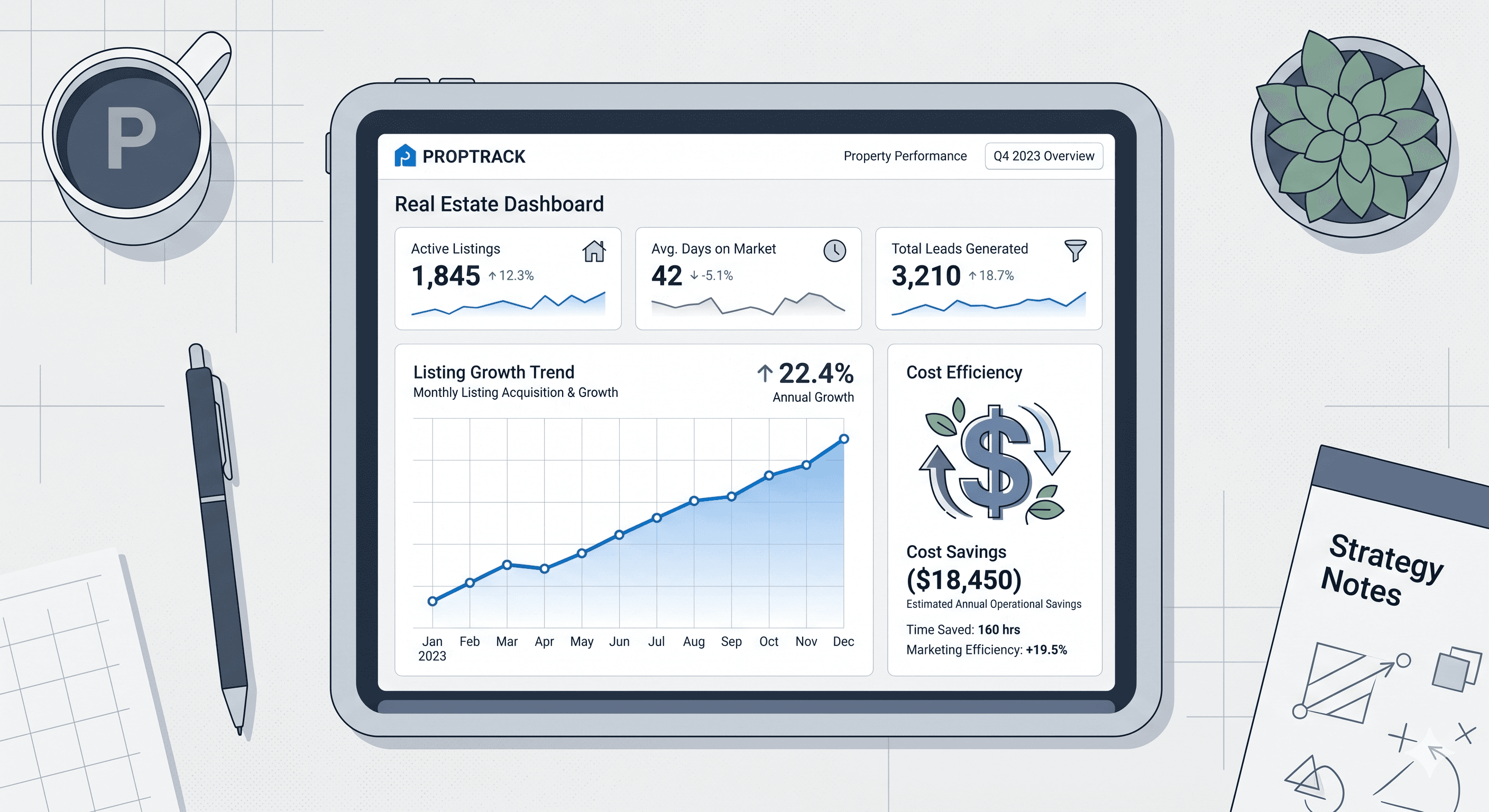
Modern analytics dashboard illustrating cost savings through affordable MLS listing management for brokerages.
Brokerage Operations
May 23, 2026Vicky Thakkar

Why Smart Brokers Choose Affordable MLS Listing Management Over In-House Hires

Why Smart Brokers Choose Affordable MLS Listing Management Over In-House Hires Margin compression is the silent threat eroding profitability in modern real estate brokerages. Every dollar that’s tied up in fixed overhead is a dollar not available to invest in growth, or in hiring agents, or in profit margins.” The core of this administrative bottleneck lies in the traditional method of syndicating property data, which involves using permanent, in-house staff on a fixed salary to handle fluctuating listing volumes. In response, leading brokers are seeking to increase operational efficiency to lift margins and accelerate time to market. They’re cutting bloated payrolls in favor of affordable MLS listing management. Brokerages are pushing listings through faster, enforcing stricter compliance, and dramatically cutting overhead by moving away from fixed-cost human capital to highly systemized, precision-engineered pipelines. If your brokerage still uses an in-house W-2 employee to manually enter listing data, you’re probably paying too much for a sub-optimized, rigid workflow. It’s time to move beyond old hiring models and build scalable infrastructure. Hiring an internal listing assistant feels like the logical next step for a growing brokerage, until you rigorously break down the unit economics. Brokerage owners often calculate the cost of an employee purely by their base salary, ignoring the compounding expenses of maintaining human infrastructure for a task that is inherently transactional. The True Cost of W-2 Employees: A Breakdown: A full-time in-house listing coordinator typically makes $3,000 to $5,000 per month in base salary. But the real cost of the money is much higher than the gross paycheck. When auditing operational expenses, brokerages must account for: Payroll Taxes and Benefits: FICA, State Unemployment Insurance (SUI), Workers’ Compensation, and, if there are health benefits, another 20% to 30% more than the base salary. Software and Licensing Dues: Independent MLS login credentials, transaction management software seats (think SkySlope, Dotloop), and dedicated hardware all add up to another several hundred bucks a month. Management and Training Time: The invisible cost of training a new hire, managing their daily output, and dealing with turnover drains hundreds of hours annually from managing brokers. The Problem with Fixed Costs in a Variable Market: The real estate market is very volatile and seasonal. Your brokerage workload bounces between the spring market peak and the holiday season slowdown, but your fixed payroll stays painfully static. This structural flaw leads to major operational inefficiencies: Overpaying during low season: In December, when the listing volume falls 40%, you continue to pay 100% of your assistant’s salary for downtime. Overwhelmed during peak volume: In May, when your inventory rises, one assistant is not enough. Operational Insight: Industry data from the National Association of Realtors (NAR) continually points out that brokerages with high fixed overhead struggle the most during market contractions. Converting backend operations from fixed payroll to variable, demand-driven costs is the fastest way to recession-proof your brokerage’s P&L. The core shift happening across elite, modern brokerages is the transition from managing people to deploying systems. Affordable MLS listing management fundamentally reorganizes how brokerages handle backend data entry. Eradicating Payroll for Precision Output: Instead of absorbing a flat $4,000 monthly expense regardless of output, you shift to a strict pay-per-listing model. If you process 5 listings in a slow month, you pay for exactly 5. If you process 50 listings during the spring rush, you pay for exactly 50, without ever needing to interview, hire, or train temporary staff. What this optimized infrastructure unlocks for brokerages: Absolute Cost Control: You only deploy capital when a revenue-generating event (a new listing) is initiated. Instant Scalability: A systemized vendor can absorb a 500% increase in listing volume overnight. An in-house assistant cannot. Downtime Removal: Your employee’s break times, illnesses, and vacation periods are your responsibility. However, you will be billed strictly for the end product. Building a Systemized Listing Pipeline Affordable MLS listing management is not simply about outsourcing; it is about upgrading to a precision-engineered workflow. Dedicated listing teams utilize advanced tech stacks to extract data from intake forms, cross-reference public tax records, optimize media assets, and push data live to the MLS with zero friction. It removes the guesswork and variability of human execution. Pro Tip: When auditing your current listing workflow, track your "Cost Per Listing" (Total Monthly Assistant Cost ÷ Total Monthly Listings). Brokers are often shocked to realize they are effectively paying $150 to $200 per listing internally, a cost that can be reduced to $15 with the right operational partner. High-performing brokerages do not just cut costs; they obsessively optimize their operations. While reducing overhead is a massive benefit of affordable MLS listing management, the operational speed and strict accuracy it provides are what truly drive brokerage growth. Accelerating MLS Activation Times: In real estate, speed to market directly impacts Days on Market (DOM) metrics and client satisfaction. An in-house assistant juggling phone calls, agent questions, and office management will invariably experience delays in data entry. Professional listing coordination teams operate in a vacuum of deep work. The company can complete listing contracts, analyze the property information, organize photos in high resolution, and publish listings within moments, compared to a distracted internal employee who does the same task. Bulletproof Compliance and Quality Control Assured: The local MLS boards maintain strict rules about data entry, photo watermarks, public remarks, and timely status updates. In cases such as the National Association of REALTORS® Clear Cooperation Policy and RESO Guidelines, brokerages can suffer significant fines, usually between hundreds or even thousands of dollars. A standardized listing management system provides: Compliance Checks Embedded in the System: Each field is checked for MLS rule compliance (CRMLS, Bright MLS, etc.) prior to posting to the MLS. Standardized Quality: Consistent formatting of public remarks, exact mapping of room dimensions, and perfect photo sequencing. Seamless Revisions: Price reductions and status changes are executed instantly via a ticketing system, eliminating the risk of fines for delayed updates. To clearly illustrate why systems outperform traditional staffing models, brokerages must look objectively at the risk and scalability metrics associated with both paths. The verdict in modern real estate tech is clear: fixed staffing models are a liability. The Scalability Gap: When comparing an internal hire to affordable MLS listing management, the most glaring disparity is scalability. Minimizing Risk through Process-Based Workflows: Any human error that comes from entering data manually is solely the responsibility of the agent who made the mistake. If they enter the incorrect school district, calculate the wrong square footage, or forget to attach the lead paint disclosure form, the blame lies with the broker. By leveraging a specialized listing management service, brokerages transfer this manual execution to a system governed by standard operating procedures (SOPs) and multi-tier quality assurance protocols. Operational Insight: The most significant bottleneck for boutique brokerages attempting to cross the $50M to $100M annual production threshold is administrative debt. Transitioning to a variable-cost listing model immediately relieves this pressure, allowing management to focus entirely on agent recruitment. The decision to invest in affordable MLS listing software is more than cost savings – you are transforming the operational infrastructure of your company. It acts as a major growth driver, allowing you to recruit top-notch real estate agents. Standardizing Workflows Across the Brokerage: A strong brand is consistent, no matter the volume of activity. From 10 to 150 listings a month, all of the properties need to be posted equally polished. Systemized listing coordination ensures operational clarity. Every listing follows the same high-performance pipeline, featuring perfect photo formatting, accurate syndication to portals, and flawless compliance documentation. Freeing Agents for Revenue-Generating Activities: Agents are revenue generators, not data entry clerks. When an in-house assistant is overwhelmed, agents often end up picking up the administrative slack, spending their evenings resizing photos or struggling with MLS drop-down menus. By outsourcing this to a precision-engineered listing service, brokerages provide their agents with a massive value proposition: Total elimination of administrative desk-time. More hours dedicated to prospecting, conducting listing presentations, and negotiating contracts. A frictionless, concierge-level experience that makes the brokerage highly attractive to competing top producers. If you are ready to replace expensive, rigid in-house hires with a lean, scalable system, PrimeRealOps delivers operational excellence tailored specifically for high-performing real estate brokerages. We do not just process data; we act as the tech-forward operating system for your back office. Why pay an in-house assistant $4,000 a month when you can get precision-engineered listings processed for exactly $15 per file? Our Elite Listing Management Tiers: We offer structured solutions designed to match your exact operational needs without the bloat of traditional salaries: Pro Tier: $15 per listing: High-speed, highly accurate MLS input complete with rigorous compliance checks and data validation. Prime Tier: $39 per listing: Comprehensive, full-service listing management, including unlimited updates, status changes, photo re-sequencing, and document uploads. With PrimeRealOps, there are no salaries, no hidden overhead, and zero inefficiencies. You scale instantly without ever conducting another interview, paying only when you have active listings to process. Conclusion: The real estate industry is rapidly evolving, and the brokerages that will dominate the next decade are those that mercilessly eliminate inefficiencies and automate their backend operations. Clinging to the outdated model of paying a fixed salary for data entry restricts your agility and eats into your margins. Affordable MLS listing management is no longer an optional luxury; it is a critical competitive advantage that allows you to reduce overhead, increase speed to market, and scale without limits. Stop building your operations around people and start building them around systems. Ready to cut costs and engineer a faster, more profitable brokerage? Explore our scalable Listing Management Services and transform your operations today.

Minimalist CRM dashboard showing fast real estate lead conversion and calendar appointments.
Sales & Leads
May 29, 2026Vicky Thakkar

Why You Need to Hire an Inside Sales Agent in Tennessee

In the real estate sector, inbound lead intent decays by the minute. A frequently cited lead response study by MIT and Harvard Business Review found that calling a prospect within the first 5 minutes of their inquiry increases the probability of qualifying that lead by 21 times compared with waiting 30 minutes. If you are running a high-volume brokerage or top-producing team in Nashville, Memphis, or Knoxville, leaving an inbound Zillow or website lead to wait for an hour is equivalent to giving your commission directly to another company. To plug this revenue leak, modern brokerages must systemize their front-end communications. When you decide to hire an Inside Sales Agent in Tennessee, you instantly transform a reactive, agent-dependent follow-up process into a structured, conversion-optimized pipeline. This guide breaks down the operational mechanics of speed-to-lead, the exact workflows an Inside Sales Agent (ISA) manages, and how dividing labor between prospectors and closers allows elite real estate teams to scale aggressively without burning out their top producers. In real estate operations, "speed-to-lead" is not just a buzzword; it is the primary metric that dictates pipeline velocity. The first professional to engage a prospective buyer or seller typically wins the relationship. The National Association of Realtors (NAR) reports that 78% of buyers end up working with the first agent to respond, according to its survey. In your CRM, the consumer is actively answering when an inbound question appears. They have their smartphone in hand, are checking out properties, and they're incredibly focused on finding the perfect real estate deal. If your response time stretches beyond five minutes, several operational breakdowns occur: The prospect continues searching: They will click on another listing and submit another form to a competing brokerage. Intent cooling: The dopamine hit of finding a potential dream home fades, and the prospect returns to their daily tasks. Brand erosion: A delayed response silently signals to the high-net-worth client that your team lacks urgency and operational discipline. Operational Insight: In Follow Up Boss or KVCore, use Operational Insight to monitor your team's "Time to First Action" metric. Unless you have a system to make appointments and the average response time is over 5 minutes, it's more like luck. Why? By employing a dedicated ISA, you guarantee that an operational firewall sits between your inbound marketing spend and the chaotic schedules of your field agents. The ISA's sole directive is rapid engagement, ensuring no lead sits idle while your agents are navigating traffic or conducting property tours. A common misconception among independent brokers is that an ISA is merely a telemarketer reading from a static script. In reality, a highly trained ISA operates as a front-line revenue engine. They utilize specialized conversational frameworks to filter out casual window-shoppers and elevate highly motivated, pre-qualified buyers to your agents' calendars. When you hire an Inside Sales Agent in Tennessee, they take ownership of the following critical workflows: Instant Lead Response: Tracking inbound channels (Zillow Premier Agent, Realtor.com, Facebook Lead Ads, Google PPC) and initiating automatic SMS, phone calls, or emails within 60 to 120 seconds of submitting leads. Deep Lead Qualification: Converting a qualified call to an electronic hard calendar invite for property showings, buyer consultation sessions or listing presentations as part of 'direct appointment.' Direct Appointment Setting: Transitioning a successful qualification call into a hard calendar invite for a property showing, buyer consultation, or listing presentation. Managing CRM effectively: Recording every call outcome, updating contact tags, assigning automatic action plans, and maintaining a clean and relevant database instead of being lost in relegation. Long-Term Nurturing: Keep your brokerage in mind by tracking "C-level" leads on a regular basis, such as every 30 days, 60 days, or 90 days, over the next 6-12 months, to ensure long-term success. To execute this, an ISA leverages dialing technology and CRM integrations to maintain a volume of outbound activity that a field agent simply cannot sustain. They are tethered to the desk, focused entirely on the metrics of dial-to-connect and connect-to-appointment ratios. Pro Tip: Never allow agents to manually cherry-pick leads from the master database. Route all unworked or inbound leads directly to the ISA’s smart list. This creates a highly accountable, single point of failure for front-end conversions. Failing to implement a dedicated follow-up system creates a silent but massive drain on your brokerage’s profitability. Real estate teams spend thousands of dollars monthly on lead generation, yet frequently lack the back-end infrastructure required to maximize the return on that investment (ROI). Reflect on the daily routine of an accomplished real estate professional in Tennessee. The high-pressure, face-to-face activities of home inspections, repair negotiations, open house hosting, and driving between listing appointments are the primary factors that determine their schedule. At 2:15, a lead appears on the brokerage website. The field agent is expected to be unavailable on Tuesday at PM. Why? Without an ISA, the follow-up breaks down in predictable ways: The agent attempts to call the lead three hours later, reaching voicemail. The agent forgets to set a follow-up task in the CRM. The lead receives an automated, impersonal drip email that they ignore. The leader slips up and purchases a $600,000 property with an adversary after 45 days. The opportunity cost of this single missed interaction is severe. In a market where the average commission check can exceed $15,000, missing just two convertible leads a month due to poor response times equals $360,000 in lost gross commission income annually. You must separate the act of prospecting from the act of closing. Attempting to make field agents responsible for both creates inconsistent communication and an erratic, "feast-or-famine" sales pipeline. Operational Insight: Review your CRM for leads tagged "Attempted Contact - No Response" that have less than three outbound call attempts logged. The conversion of an internet lead requires an average of 6 to 8 touchpoints, as per industry statistics. If your agents are stopping at three, your pipeline is leaking revenue daily. High-growth brokerages do not rely on hybrid roles. They scale by engineering a strict division of labor, modeling their operations after high-velocity B2B SaaS sales teams. In this model, you have a distinct separation between the "SDR" (Sales Development Representative, or ISA) and the "AE" (Account Executive, or Real Estate Agent). The Before-ISA State (Reactive Lead Handling): Leads enter a round-robin system and sit untouched for hours. Follow-ups are sporadic and heavily dependent on an agent's current mood or schedule. The pipeline is unpredictable, making it impossible for the broker to forecast quarterly revenue accurately. Agents experience burnout from trying to balance cold calling with client servicing. The After-ISA State (Proactive Pipeline Management): Every inbound inquiry receives a human touchpoint within five minutes. Follow-up cadences are executed flawlessly according to standard operating procedures. Field agents log into their CRM to find pre-vetted, high-intent appointments mapped out on their calendar. The brokerage’s lead conversion rate increases, directly lowering the customer acquisition cost (CAC). The morale of agents at your brokerage is positively impacted by highly qualified appointments, leading to better retention. They can solely utilize their most valuable talents for developing personal connections, evaluating market shares, and closing deals. Pro Tip: It's advisable to establish a formal "Handoff Protocol." When the ISA schedules an appointment, which involves sending alternating emails and calendar invites, followed by introductory text detailing that the client will be accepting the offer and maintaining their trust in place. It's not just hiring a remote worker; it'll also require seamless integration into your existing system to deploy an ISA. This is where working with a specific real estate operations firm becomes the most significant advantage. PrimeRealOps Executive Services delivers an elite Inside Sales Agent infrastructure built specifically for top-tier brokerages. When you hire an Inside Sales Agent in Tennessee through PrimeRealOps, you bypass the friction of recruiting, training, and managing offshore talent directly. The PrimeRealOps Structural Advantage: Cost-Effective Scalability: Secure dedicated, highly trained ISA support at competitive rates of $7 to $12 per hour, drastically reducing payroll overhead compared to a local, in-house hire. Synchronized Business Hours: PrimeRealOps ISAs operate during standard US business hours, ensuring real-time responsiveness when your Tennessee buyers are actively searching. Tech-Agnostic Fluidity: Quick and easy integration into industry standard suites such as Follow Up Boss, KVCore, BoomTown, Chime (Lofty), and dialers like Mojo or Vulcan7. Regular accountability: Incorporating pipeline tracking, daily end-of-shift notifications, and adhering strictly to established follow-up workflows. An ISA from PrimeRealOps does not just make calls; they act as the custodian of your database. They ensure that every tag is accurate, every automated campaign is firing correctly, and every piece of data is logged to give you, the broker, total visibility into your conversion metrics. Conclusion: Speed-to-lead is no longer an optional best practice; it is the fundamental baseline for survival in today’s real estate market. Every inbound lead represents active consumer intent, and without a specialized resource dedicated to capturing that intent instantly, your marketing budget is subsidizing your competitors. Choosing to hire an Inside Sales Agent in Tennessee fundamentally rewires your brokerage for scale. It offloads the grueling work of prospect qualification, eliminates the financial drain of missed follow-ups, and arms your field agents with a calendar full of high-probability appointments. Stop letting warm leads cool off in your CRM. Reclaim your pipeline and scale your operations with precision by deploying a highly trained real estate virtual assistant today. Explore our Inside Sales Agent Services to turn your inbound lead flow into a predictable conversion machine.

Modern desk setup symbolizing the organized workflow of a Kentucky Real Estate Virtual Assistant managing broker operations
Brokerage Operations
May 29, 2026Vicky Thakkar

Engage an Elite Kentucky Real Estate Virtual Assistant to reclaim your time.

It's not possible to run a real estate business as your own secretary. The shortage of good leads is the most frequent issue that brokers and agents face. Often the biggest challenge is in having adequate operational support.' Spending an hour manually answering routine emails, updating your CRM with contact details, or chasing down signatures is counterproductive to revenue-generating activities like prospecting, negotiating, and closing deals. NAR reports that agents typically spend over 40 hours per week working with clients or negotiating contracts, while less than one-third of that time is spent on this front. What does this mean? All that is left is lost in administrative friction. The only way for top-performing teams to achieve growth is by delegating this operational burden. By incorporating an elite Kentucky Real Estate Virtual Assistant, your workflow is transformed, eliminating backend bottlenecks and enabling consistent execution. If you want sustainable growth, leverage is essential, which begins with strategic delegation. Administrative tasks are a common practice in the early stages of building equities and real estate portfolios. However, as your transaction count rises, this DIY method becomes the exact limit that caps your growth. Given their operational capacity, most agents reached a revenue plateau as the market cooled. Inbox Overload and CRM Decay: Data integrity is the initial concern when you are solely managing the back-end project. Your CRM is prone to applying inconsistent tags, sending out useless emails, and scheduling incorrect follow-up sequences. Reflect on the recurring challenges faced by in-house brokers: Inbox overload: Managing an overload of marketing spam, title company updates, and client inquiries without any clear-cut-off time. CRM updates: Include the automatic input of lead information from Zillow, Realtor.com, or your website into Follow Up Boss or other platforms. Appointment scheduling: The endless back-and-forth ping-pong of finding a time that works for a showing or listing presentation. Follow-ups and reminders: Relying on memory or sticky notes instead of automated, sequenced task reminders. Using memory or sticky notes instead of automated task reminders is hindering your business's efficiency. This leads to inefficiency. Your time is minimized by a Kentucky Real Estate Virtual Assistant, freeing you to concentrate on tasks that will motivate you. Operational Insight: It takes three days to audit oneself. Why? What hourly rate do you have to work for (250 dollars per hour)? To perform administrative tasks like data entry or inbox organization, a daily fee of $500 is required for every two hours worked. This is not a cost, but rather rapid and efficient profitability. Hiring "help" differs significantly from establishing operational infrastructure. Generic helpers linger on instructions, while an advanced virtual assistant in real estate enters your organization and executes customary procedures (SOPs). Beyond Basic Admin: Building Structural Leverage: An elite virtual assistant operates as the central nervous system of your daily workflows. They do not just check boxes; they maintain the velocity of your pipeline. Core responsibilities executed by an elite VA include: Inbox Management: Implementing a "Zero Inbox" protocol. Your VA filters out noise, flags urgent title/escrow emails, and drafts responses for standard inquiries. You only see what requires your specific expertise. CRM Management: As the manager of your database. This will include ensuring that all contacts are current, labeled as buyers or sellers, and placed into the proper smart lists or drip campaigns. Lead Follow-Up Support: While they may not be making sales calls, they make sure nothing falls through the cracks when it comes to follow-ups by setting up your daily lead call lists and executing text or email touches prior to the call. Scheduling Coordination: Handling your schedule with pinpoint accuracy. Coordinating showings, mapping out driving routes for property visits, and coordinating schedules of multiple people to attend meetings. Administrative Support: Handling all data entry, managing document storage compliance, and tracking task completions across your project management tools. The Psychology of Speed to Lead: The MIT Lead Response Study famously highlighted that the odds of contacting a lead decrease by over 10 times in the first hour. If you are in a listing appointment when a web lead comes in, and you wait two hours to respond, that lead is likely gone. Your virtual assistant ensures immediate, systematized acknowledgment and routing of every inquiry, fundamentally protecting your marketing ROI. Pro Tip: Have your virtual assistant set up an "Urgent Triage" folder in your inbox. Configure rules so that only emails from active clients, specific brokers, and your transaction coordinator bypass the VA's filter. This reduces decision fatigue and allows you to process critical communications in minutes rather than hours. Trying to do everything yourself does not save money; it directly costs you growth. Many agents look at the hourly rate of an assistant and see an expense, failing to recognize the catastrophic invisible costs of unmanaged operations. The Attrition of the Unorganized Agent: When backend operations are neglected, the client experience degrades. A missed email from a lender could delay a closing. A delayed response to a new buyer could cost you a $15,000 commission. The compounding effect of these minor operational failures is massive. The hidden costs of avoiding delegation include: Missed follow-ups: Contacts that you’ve spent months nurturing just fall through the cracks because you forgot to follow up. Translation: You lose sales. Slow response times: Consumers now expect instant results. Any delay will give your client the impression that you don’t care about them. And guess what? They won’t tell you. You’ll simply lose the referral. Burnout: You try to juggle marketer, sales rep, and administrative manager roles. But this results in inconsistent performance and inevitable burnout. Limited scalability: You cannot add more clients to your roster if you do not have the time to service them. Your income becomes artificially capped by your administrative bandwidth. The best real estate agents know that top performers don’t succeed through hard work. They succeed through efficient work. Top performers delegate all operations/administration and focus only on selling, relationship building, and negotiating. Operational Insight: Build a "Cost of Inaction" (COI) calculator. Track how many leads you failed to follow up with last month. Multiply that by your average conversion rate and average commission. That lost revenue is exactly what refusing to hire a Kentucky Real Estate Virtual Assistant is costing you. Real estate is a hyper-local industry. National trends matter, but deals are closed based on neighborhood-level dynamics. Consequently, your operational systems must reflect the realities of your specific market. Hiring a generic offshore assistant who does not understand the nuances of the regional landscape often creates more friction than it solves. Aligning Backend Operations with Regional Workflows: A specialized Kentucky Real Estate Virtual Assistant brings contextual awareness to your operations. They are trained to understand the specific rhythms of your market, ensuring that your backend processes align with how business is actually conducted locally. A localized virtual assistant understands: Local Market Dynamics: Familiarity with geographic regions, neighborhood naming conventions, and typical property types across Louisville, Lexington, or Northern Kentucky. Regional Workflows and Expectations: Understanding the timeline of a typical Kentucky real estate transaction, from initial contract to closing, and managing expectations accordingly. MLS and Compliance Nuances: Navigating regional Multiple Listing Services (MLS) with accuracy and understanding the strict documentation compliance required by local commissions. When your VA understands the terminology and the timeline, they can proactively manage document prep and CRM updates without needing constant hand-holding. This localized context is what elevates a virtual assistant from a simple task-executor to a strategic operational partner. Pro Tip: Create a localized "Glossary of Terms" video recording for your VA. Spend 15 minutes screen-recording a map tour of your primary service areas, highlighting key neighborhoods, local terminology, and average price points. This rapidly accelerates their onboarding and contextual understanding. Transitioning from chaos to operational excellence requires the right partner. If you are ready to reclaim your schedule and operate at the level of a top 1% broker, PrimeRealOps Executive Services delivers elite virtual assistant support engineered specifically for the real estate industry. Seamless Implementation Without Disruption: The biggest fear agents have about hiring a VA is the time it takes to train them. PrimeRealOps eliminates this barrier through structured, tech-forward onboarding. We do not just hand you a resume; we integrate a trained professional directly into your business. What you get when you deploy our services: Dedicated Kentucky Real Estate Virtual Assistant Support: Highly vetted professionals who understand the real estate lifecycle. Scalable Rates: Starting from $7 - $12/hour. There is no overhead, no HR compliance risk, and no long-term contractual lock-ins. US Business Hours: Staff aligned with your specific time zone for real-time execution and immediate communication. Seamless Tech Integration: Native familiarity with industry-standard tech stacks, including Follow Up Boss, Sierra Interactive, various CRM systems, and regional MLS tools. Implementation That Actually Works: We enforce a mandatory 1-week hands-on implementation phase. During this time, we audit your current workflows, document your SOPs, and embed our virtual assistants directly into your daily operations. There is no disruption to your active deals and no steep learning curve. We build the engine while you continue to drive the car. Conclusion: Stop being the bottleneck in your own business. Growth in real estate is not about generating an infinite amount of leads; it is about building the operational capacity to service the leads you already have flawlessly. Every missed email, delayed CRM update, and forgotten follow-up is a leak in your revenue pipeline. By hiring a top-notch Kentucky Real Estate Virtual Assistant, you can shift from being an agent overwhelmed by paperwork to a business owner focused on making money. Take back your time, organize your daily tasks, and create a brokerage that can grow without exhausting you. This way, you can be in control and make your business successful without sacrificing your well-being. With a virtual assistant, you can systemize your workflows and have more time to concentrate on what really matters - generating revenue and building a thriving business. Delegate smarter. Operate faster. Close more deals. Ready to transform your operations? Explore PrimeRealOps Virtual Assistant Services today and build your scalable backend.

Reviews

Client Success Stories

Compliance used to be a nightmare. Now it is seamless, tightly documented, and my brokerage runs without fear of audit risk.

RF

Robert Fox

Broker Owner · Orange County, MD

Their response time is incredible. It feels like they are in my office next door. Every listing goes in perfectly, every time.

LM

Laura Miller

Listing Coordinator · Denver, CO

PrimeRealOps completely transformed how my team operates. Our paperwork is handled, our closings are on track, and I can finally focus on selling.

SJ

Sarah Johnson

Team Lead · Austin, TX

Operational Clarity

Operational FAQ

GeneralBilling, contracts, and how we operate
How does billing work?
Listing Management and Executive Services are billed weekly for the first month, then monthly. Transaction Coordination is billed only on successful closing, with a $50 fee if the deal falls through.
How do you ensure accuracy across different MLS boards?
They use an internal compliance checklist and a 3-point audit process before listings go live.
Do I need to migrate to your software?
No. They work directly inside existing platforms like Follow Up Boss, Dotloop, and Matrix.
Is there a long-term contract?
No fixed-term contract. Agreements work on a 30-day notice period.
How quickly can we launch?
They offer a 72-hour onboarding and deployment cycle.
Is my data secure with remote staff?
Yes. Operations run through encrypted systems with signed NDAs.
What happens if my volume spikes overnight?
Their team is built to scale quickly and handle sudden workload increases.
Listing ManagementMLS accuracy, photo editing, and live timelines
Do you edit photos before uploading?
Yes. Standard visual optimization and compliance checks are included.
Do you check the property description?
Yes. They proofread content and scan for Fair Housing violations and restricted keywords.
How do you bill for listings?
Weekly billing for the first month, then monthly. Prime tier includes unlimited changes.
How do you ensure accuracy on the MLS?
Through a proprietary pre-flight checklist and tax record verification.
How fast can you make a listing live?
Same-day activation if data is received before 2 PM EST.
Transaction CoordinationClosing support, compliance audits, and billing
Do you talk to my clients?
Yes. They act as part of your internal closing department.
What if the deal falls through?
Only a $50 cancellation fee is charged.
How do you bill for transactions?
Fees are typically paid at closing through escrow/title companies.
Which transaction platforms do you support?
Dotloop, DocuSign, and brokerage-specific systems.
Do you handle compliance audits?
Yes. They proactively audit files against brokerage requirements.
How do I check the status of my file?
Weekly status reports are provided every Friday.
Executive ServicesVirtual assistants, communication, and scheduling
Can they handle my phone calls?
Yes. They can manage inbound and outbound calls through VoIP systems.
What if I don’t feel in sync with my VA?
They provide a 48-hour replacement guarantee.
How do you bill for Executive Services?
Weekly during the first month, then monthly.
How do I know they are actually working?
Daily end-of-day reports are shared.
Do they work in my timezone?
Yes. Staff align with US business hours.
Are they exclusive to me?
Yes. Dedicated professionals work specifically for one client.